
Short answer: housefishing is editing a listing photo so the home looks better online than it does when you walk in: a defect painted out, a power line removed, a view swapped, a small room made to look big. The name comes from “catfishing”. Most of it already breaks the MLS rules we have read, and in California it has needed a disclosure and a link to the original photo since 1 January 2026. California’s rental version starts on 1 January 2027, and bills in Washington, D.C., New York and New Jersey would add more. Honest editing is still allowed: keep the original, show it next to the edit, say what changed, and never remove a defect or something the owner cannot control.
Where the word comes from
Nobody we could find claims to have coined it. The earliest use we could open is Hoodline’s, on 4 March 2026: a wave of AI-polished listing photos “is fueling what agents are calling ‘housefishing,’ slick digital edits that make homes look far better on screen than they do at the front door.” Hoodline credits Business Insider for its agent interviews; Business Insider’s site refused our reader, so we could not check its date or wording. Source: Hoodline.
A week later Realtor.com defined it as “manipulating listing photos to hide property flaws”, and explained: “The term ‘housefishing’ comes from ‘catfishing,’ which is when someone creates a fake identity to manipulate or deceive others”. Source: Realtor.com, syndicated on Yahoo, 11 March 2026.
By September buyers had a verb for it. Real Estate News reported on 8 September 2026 that “more irritated buyers” are “starting to use the term ‘housefished’ to describe misleading listings, according to the National Association of Realtors.” Source: Real Estate News.
The word is news language, not law. No statute or MLS rule we have read uses it. The laws talk about “digitally altered” images, and that is the test that matters for your listing.
Housefishing or honest editing?
A useful test: would a buyer standing where the camera stood see something different from the photo, and would they care? Brightening a dark room changes nothing they will find. Painting out damp changes the thing they are buying.
| Edit | Which is it? | What to do |
|---|---|---|
| Exposure, white balance, straightening, cropping | Correction | Nothing, if the room still looks as it really does |
| Removing clutter, bins, a parked car | Honest, if labelled | Disclose it and show the original |
| Virtual staging at true scale | Honest, if labelled | Disclose it and check the furniture’s size against the room |
| Sky replacement, day to dusk | Honest, if labelled | Disclose it. We treat dusk as ambiguous and disclose by default |
| Furniture shrunk to make a room look bigger | Housefishing | Don’t |
| Damp, cracks, stains or worn floors painted out | Housefishing | Don’t. Fix it or show it |
| Power lines, poles or a neighbour’s house removed | Housefishing | Don’t |
| A new view through the window, a greener lawn | Housefishing | Don’t |
The last four are not a matter of taste. Northwest MLS’s photography guide puts it in one line: “Do not manipulate images in a way that misrepresents what is for sale. Examples: removing the power lines, adding a lawn, adding a driveway, or removing any property defects.” Source: NWMLS, Real Estate Photography 101.
Here is the honest kind of edit: it removes loose things, not anything that comes with the home. The flowers, books, plants and ornaments are gone, and the sofas, tables, lamps and floor are still there. Look closely, though, and the model also changed things it was not asked to: two radiators behind the removed plants now run down to the floor, where the original shows only their tops, and the word on the poster is scrambled. That is why you compare before you publish. It is still a digitally altered photo, because things were removed, so it still needs a disclosure and the original next to it.
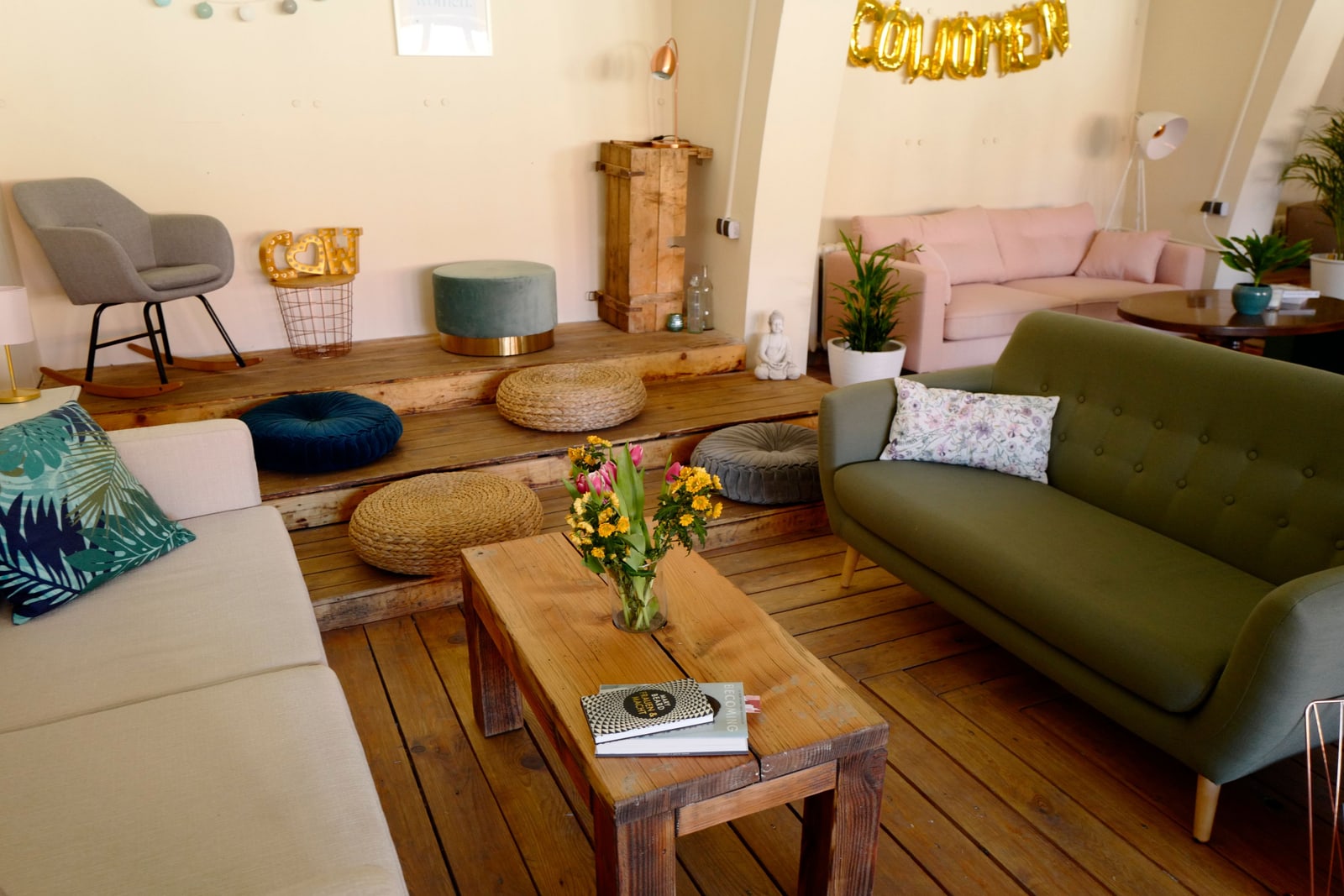

For all 25 common edits sorted against the law and 10 MLS rulebooks, see what counts as a digitally altered photo. For staging, an easy way to housefish by accident, see bad virtual staging: 10 checks.
How common is it?
The only large count we found is a vendor’s. Coraly, which makes an AB 723 compliance workflow with San Diego MLS, looked at just under 40,000 primary listing photos on Zillow, Redfin, Realtor.com and Homes.com in the first quarter, according to HousingWire’s June 2026 report. It found signs of alteration in 10.8% of them (4,330 photos). “Sky replacement alone appeared in 69% of altered images, making it the single most common editing technique.” And: “More than 90% of altered images showed no visible disclosure language on the image itself, in captions, listing descriptions or adjacent text, according to the study.” Source: HousingWire, 24 June 2026. We could not find the report itself, so these figures are as HousingWire reported them.
Read it carefully. Altered is not the same as housefishing: most of those photos had a new sky, which is allowed with a label. The finding that matters is the second one. Most altered photos carried no label at all, and for a California listing the label is what the law requires.
The rules already in force
California, sale listings. Since 1 January 2026, Bus. & Prof. Code §10140.8, added by AB 723, requires a licensee who uses a digitally altered image to say so on or next to it and to link to the original. The full text, what counts and where the statement goes are in our AB 723 guide. Source: §10140.8 on leginfo.
CRMLS goes further than the statute. Its Rule 11.5.2 requires the original to be shown “immediately before or after” the altered photo with a label, and then:
Subscribers may not add to a listing record any image or photo that has been altered to add, remove, or modify any (i) real property elements including but not limited to flooring, walls, windows, structural elements, cabinetry, paint color, hardscape, landscape, façade, fixtures, or floor plans unless the listed property will be improved to match the altered photo at time of close as part of the listed price, or (ii) elements outside of, or visible from, the property, including, but not limited to, streetlights, utility poles, views through windows, and neighboring properties.
So a changed wall or floor is allowed only if the home will really be finished that way by closing, as part of the price. A removed utility pole or a new view has no exception. Source: CRMLS Rules and Policy Changes, effective 1 January 2026, Rule 11.5.2.
Other MLSs’ rules, and the fines they publish, are in is virtual staging legal?
What is coming
Status as we found it on 24 October 2026. Three have passed but are not yet in force; the rest are proposals that may change or never pass.
| Where | Covers | Status |
|---|---|---|
| California, AB 2025 | Rental ads | Signed; in force 1 January 2027 |
| Wisconsin, 2025 Act 69 | Licensees’ marketing images | Law; in force from 2027 |
| New South Wales, Australia | Rental ads | Passed; expected early 2027 |
| Washington, D.C., B26-0858 | Sale and rental listings | Bill, in committee |
| New York State, A11635 | Sale and lease ads | Bill, in committee |
| New York City | Rental listings | Announced by the mayor; no rule text found |
| New Jersey, A4728 | Sale, rent and lease listings | Bill, before Assembly Appropriations (reported) |
California AB 2025: rentals
AB 2025 is the rental version of AB 723, by the same author, Assemblymember Gail Pellerin. The Assembly’s committee analysis calls it “the rental housing counterpart to last year’s AB 723” and says it “extends those requirements to the marketing of properties for rent and lease”. Source: Assembly Privacy and Consumer Protection Committee analysis, hearing of 16 April 2026.
The governor’s office lists AB 2025, “Tenancy: digitally altered images: disclosure”, among the bills he signed. Source: Governor Newsom’s legislative update, 27 September 2026. The California Apartment Association says “The law takes effect Jan. 1, 2027”, and that the disclosure “must be reasonably conspicuous and appear on or next to the altered image”, with the unaltered picture or a link, URL or QR code to it when a real photo was changed. Source: California Apartment Association, 29 September 2026.
We could not open the chaptered text: leginfo.legislature.ca.gov refused our reader on 24 October 2026. If you list rentals in California, read it there before January.
Wisconsin 2025 Act 69
Real Estate News reports that the act “will take effect at the beginning of 2027” and that “real estate licensees must disclose when technology materially alters how a property is displayed in marketing images.” Wisconsin’s legislature site did not answer when we tried it on 24 October 2026, so we have not read the act itself. Source: Real Estate News, 8 September 2026.
Washington, D.C.: B26-0858
Councilmember Christina Henderson introduced the Restricting Editing and Alterations in Listing Photos Amendment Act of 2026 on 9 October 2026, with six colleagues. It covers homes for sale and for rent, and would make it a deceptive trade practice to:
Fail to include a clear and conspicuous disclosure in an advertisement or listing for real property, whether available for rent or sale, that the advertisement includes a digitally altered image. The disclosure shall include a written description of material differences between any digitally altered image and the real property’s actual condition, features, and amenities. The advertisement or listing shall include a publicly accessible and unedited version of any digitally altered image.
That written description of “material differences” goes further than California, which asks only for a statement that the photo was altered. Her statement explains why: “Some listings, particularly stock listing photos of generic rooms in apartment buildings, clearly misrepresent window views and unit size.” Like California, it exempts lighting, colour, cropping and similar adjustments that “do not materially change the representation of the real property.” Source: B26-0858 as introduced.
The Council Secretary’s memo of 19 October 2026 refers it to the Committee on Public Works and Operations, with comments from the Committee on Housing. Source: referral memo and B26-0858 on LIMS. It has not had a hearing or a vote. Axios first reported the bill on 16 October 2026; its site refused our reader, so everything here is from the bill.
New York State: A11635
Introduced at the request of Assemblymember Linda Rosenthal on 29 July 2026 and referred to the Housing Committee. It would require a statement “conspicuously located on or adjacent to each altered image” in any ad for a sale or lease, and on a website “the unaltered version of the images”, which “may comply with this requirement by including a link to the original image.” Source: NY Assembly, A11635.
New York City
On 16 July 2026 Mayor Zohran Mamdani’s Rental Ripoff Report recommended “requiring landlords to disclose when rental listings have been altered using artificial intelligence or other digital tools”. We found no rule text. Source: NYC Mayor’s Office.
New Jersey: A4728
The Assembly Housing Committee advanced A4728 in May 2026. Its sponsors say it “would prohibit landlords and property owners from using generative AI or photo editing software to deceptively alter listing images, with the exception of photos with staged furniture. A photo used for a listing must reflect the current state of the unit and not be older than five years.” CityRealty reported on 22 September 2026 that it has since cleared a second committee and is before Appropriations, and that as amended it would require furniture edits to be disclosed and the originals to be available on request. Source: CityRealty. Source: NJ Assembly Democrats, release posted 15 May 2026. The legislature’s own site did not answer when we tried it, so we could not confirm what happened after.
New South Wales
Outside the US, the NSW Parliament passed rental reforms in September 2026. The government says it “will require landlords and agents to disclose when property images in rental advertisements have been digitally altered or AI-generated to hide faults which can mislead prospective tenants, such as fake furniture that hides structural damage or misrepresents room proportions”, with penalties “of up to $22,000” for businesses. “The new laws are expected to come into effect in early 2027.” Source: NSW Government, 25 September 2026.
The pattern: say it was altered, keep the original where people can see it, and do not fake the condition of the home.
How to edit without housefishing
- Keep the original of every photo you edit. California’s law, CRMLS and the D.C. and New York bills all ask for it, and it is your proof of what changed.
- Show it next to the edit. On the MLS, upload it beside the altered one where your rules ask. Everywhere else, link it or print a QR code to it.
- Label the edit on or next to the photo. “Virtually staged” or “Digitally altered”. The free disclosure generator writes the wording.
- Remove only what leaves with the seller. Clutter, cars, bins, personal photos. Never damp, cracks, stains, worn floors or broken fixtures.
- Leave what the owner cannot control. Power lines, poles, streetlights, the neighbours, the view.
- Keep the scale honest. Staged furniture should be the size it would be in that room. A render that widens the room is not.
- Flick between the original and the edit before you publish. If something that stays with the house changed, start again.
How Duskly helps
Each Duskly edit is told to change only what it is for and keep the rest of the property as it is: the walls, floors, fixtures, windows and view. Staging edits are also told not to hide defects. Renovation is the exception by design: it changes the finishes you name, and under CRMLS Rule 11.5.2 that is allowed only if the home will be finished that way by closing. Those are instructions to the model, not a guarantee, so every render is also checked against your photo for framing, and staging renders for the room’s edges, doors, windows and kitchen islands. Staging checks do not look at wall paint or flooring. Every paid edit comes with the original, a public page that shows it at a permanent link, a QR code to that page for print, and disclosure wording for the MLS, your remarks and print. For buyers and agents checking someone else’s photo, the free photo checker shows the provenance marks it can read: Duskly’s watermark, and metadata in JPEGs. Many edited photos carry none, so a clean result never means unedited.
Every source on this page was opened on 24 October 2026. Three sites refused our reader or did not answer that day: leginfo.legislature.ca.gov (the California statute and AB 2025’s text), Wisconsin’s legislature site and New Jersey’s. What we say about the statute is from our last read of it there, on 24 September 2026. Business Insider and Axios also refused it, so we quote neither. Bills change, and some of these will be amended or die; if one has, tell us and we will correct the page. This is a reading of published rules and bills, not legal advice: for a specific listing, your MLS, your broker or a lawyer is the authority. Living room photo by CoWomen (Pexels), Pexels licence; Duskly removed the flowers, books, plants and ornaments with AI.